
Single Shut-Off Quick Release Couplings
Single shut-off quick release couplings isolate the upstream supply when disconnected, preventing media loss and system contamination. Commonly used in pneumatic circuits, laboratory equipment, and low-volume fluid transfer, they provide a balance between flow performance and control during disconnection.
 Kee 027 Series
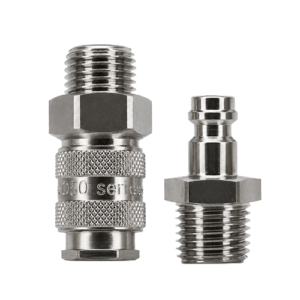 Kee 050 Series
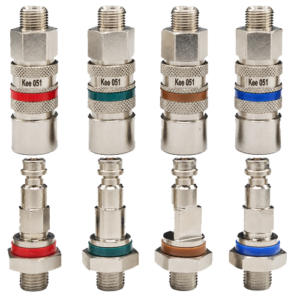 Kee 051 Series
 Kee 053 Series
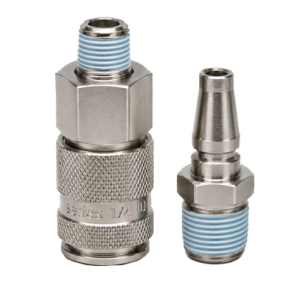 Kee 054 Series
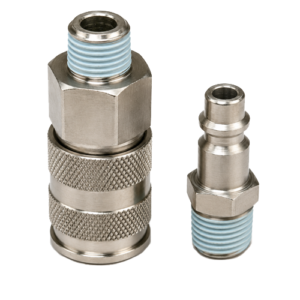 Kee 055 Series
 Kee 057 Series
 Kee 060 Series
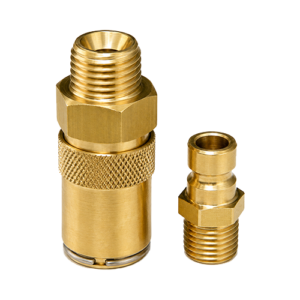 Kee 062 Series
 Kee 072 Series
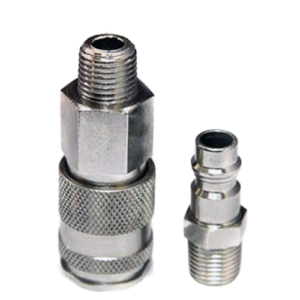 Kee 073 Series
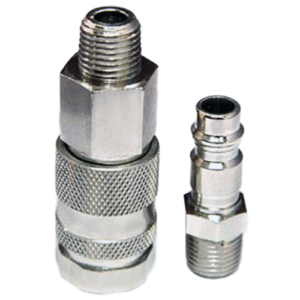 Kee 074 Series
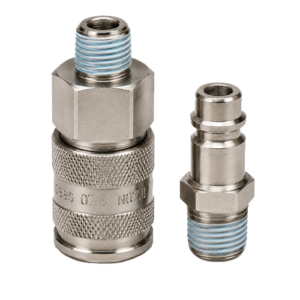 Kee 075 Series
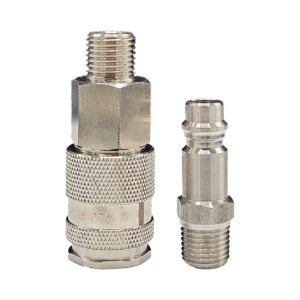 Kee 076 Series
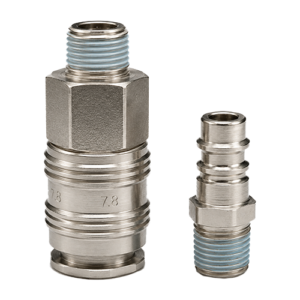 Kee 078 Series
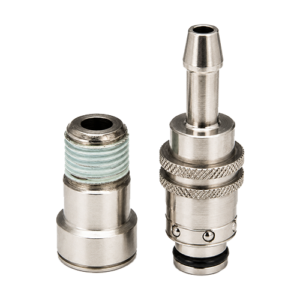 Kee 081 Series
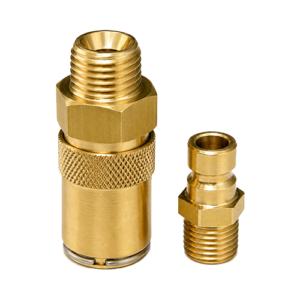 Kee 091 Series
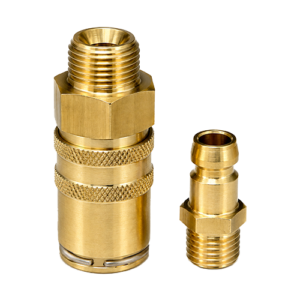 Kee 092 Series
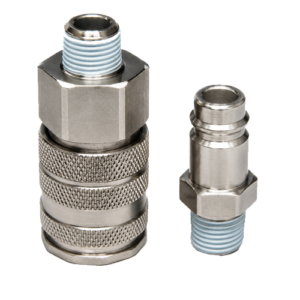 Kee 100 Series
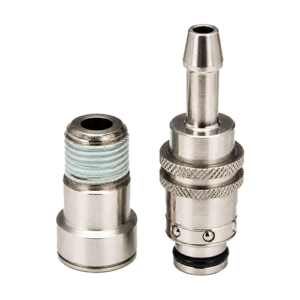 Kee 130 Series
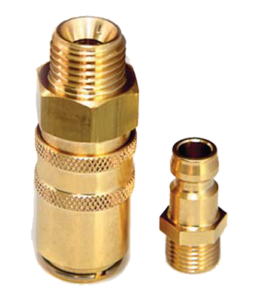 Kee 131 Series
 Kee 190 Series
How Single Shut-Off Couplings Work
Single shut-off couplings control supply-side flow using an internal valve in the coupling body.
Operating Function
- When disconnected - upstream flow is automatically stopped
- When connected - valve opens, allowing full system flow
- Plug (nipple) - no internal valve, unrestricted flow path
Flow & Performance
- Lower pressure drop compared to double shut-off designs
- Faster connection with reduced engagement resistance
- Consistent flow characteristics across repeated cycles
System Behaviour
- Reliable isolation of the upstream supply line
- Downstream line remains open when disconnected
- Suitable for systems where venting is acceptable
Typical Applications
Single shut-off couplings are selected where supply-side isolation and flow efficiency are required.
Compressed Air Systems
- Workshop airlines and distribution points
- Pneumatic tools and equipment connections
- Assembly and production line installations
Industrial Equipment
- Machinery requiring frequent connection changes
- Maintenance and service access interfaces
- Test rigs and inspection equipment
Fluid Transfer (Low to Medium Pressure)
- Coolant circulation and mould systems
- Water distribution and general fluid lines
- Lubrication and light oil transfer circuits
Why Kee Connections
- Interchangeable coupling profiles for direct replacement across common standards
- Clear product identification by valve type, series, and application
- Stocked coupling ranges for maintenance, OEM, and retrofit requirements
- Engineering support available when standard coupling solutions are not suitable
Need Help Selecting the Right Coupling?
- Identification of existing coupling profiles for accurate replacement
- Selection based on application, media, and operating environment
- Guidance on pressure ratings, flow performance, and system requirements
- Support for non-standard or OEM-specific coupling solutions where required